Nairn Dunes Restoration Case Study
Summary
A community-led initiative to restore a dunes habitat and support nature to reduce coastal erosion. This project saw a collective effort from a diverse partnership including NICE Nairn, local Community Councils, The Highland Council and community volunteers to complete a pilot project on Nairn Central Beach. The project received funding from Community Local Led Development Fund and was supported in its coordination, communication and collaboration by Highlands & Islands Climate Hub. What makes this project a success is not just the partnership approach but following initial input from the Highlands & Islands Climate Hub, the project has gone on secure phase 2 funding and is self-sustaining in its project delivery within a 12month time frame thanks to the significant efforts of NICE Nairn and the consultant Mark Bradfield.
Background
Identified community need: Following the publication of the Highland Council’s Dynamic Adaptive Pathways report and the risks identified to the town of Nairn through the Local Place Plan it was clear that community action was required to reduce the risk of coastal flooding caused by dune erosion. Support from the Hub before the pilot project got underway: - The Hub facilitated discussions on project ownership through the Community Planning Partnership and supported funding applications to secure CLLD funding to enable a pilot project. -The Hub further supported bringing key partners together to gain permission to conduct the project on Common Good Land. -The next step was to coordinate and communicate public consultation ahead of the project getting underway to explain what Dune Restoration entailed to the local community, as it would mean restricted access to some of the dune system on the Central Beach, this was done through the regular Climate Café in Nairn and a number of consultation events aimed at raising awareness of the fragility of the dunes and benefits to restoring habitat. -The Hub further supported NICE Nairn in gaining support from nature-related partners and arranged site visits with Butterfly Conservation, RSPB and also SISI (Invasive species removal) to ensure any scrub clearance did not meet with any objections based on protected species habitat. -Gained support for the project with Community Councils and Nairn Common Good (presented to local Councillors) and Nairn Community Planning Partnership. Highlands & Islands Climate Hub sat on the project steering group.
What we did
The pilot project was initially funded for a 6 month period. NICE Nairn were supported through the recruitment of project consultant and ensure the project lead was mentored throughout the project. Local contacts were shared to ensure schools were also informed of the projects aims and ambitions although given the timing of planting events it was felt that young people would be better engaged in phase 2 of the project.
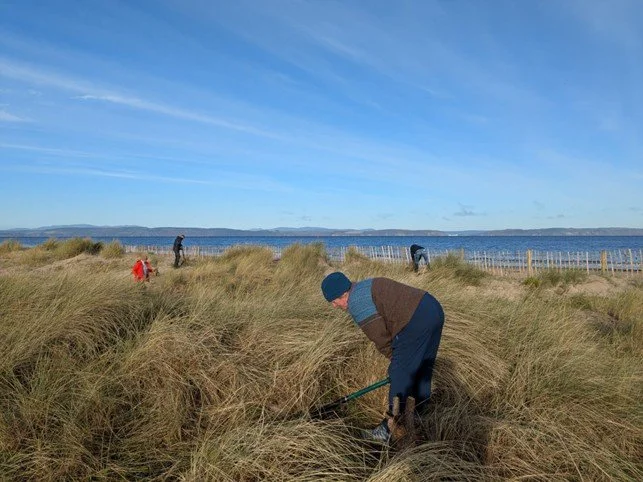
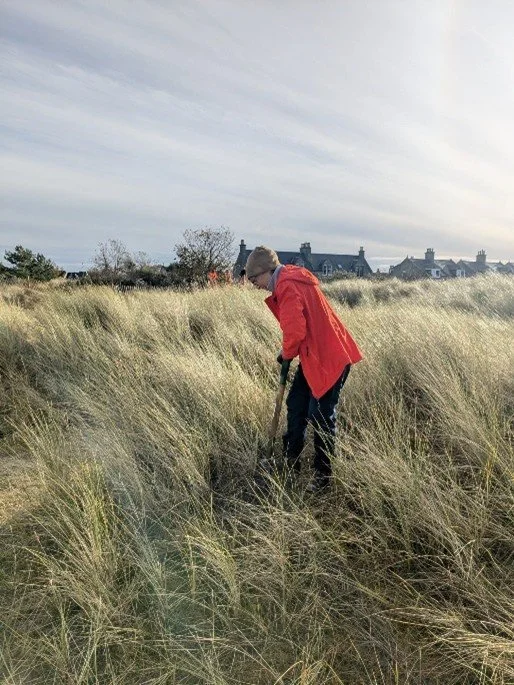
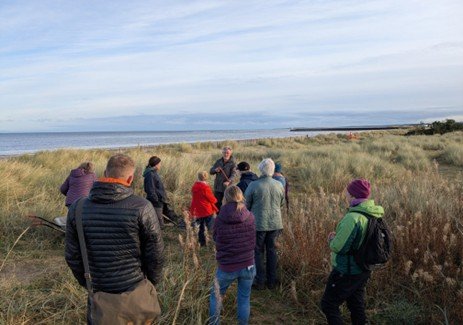
Posters and communications were shared to gain community interest and Mark Bradfield expertly coordinated and delivered 6 work parties with community volunteers who cleared scrub and transplanted marram grass.
-55 volunteers were engaged in the pilot project
-155 volunteers hours were inputted into the 6 work parties between September and November
Partnerships were key to the success of the project with work parties supported by NICE Nairn, Green Hive, The Highland Council, Balfour Beattie, Nairn BID and Gordonstoun School.
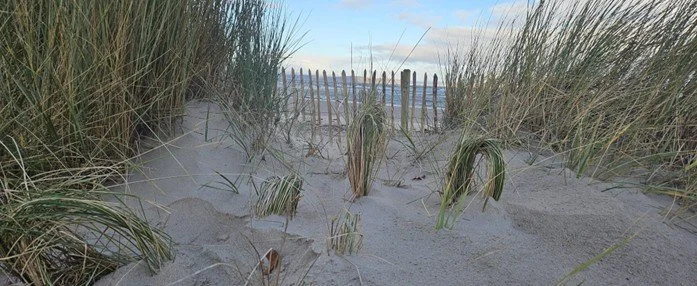
A section of 100m by 100m was fenced to restrict trampling on the newly transplanted marram grass, very few objections have been heard to the new fencing. The Highland Council were hugely supportive with their teams removing and chipping the scrub from site, this was a considerable volume of material.
What we learned
Land use permissions can be an ongoing and complicated process but the Highland Council were very supportive from the outset and throughout. Partnerships were essential for the safe and successful delivery of work parties. Ongoing education to the community was key to ensure community support for the project, information boards were put on site including contact details for project lead. News articles were written to further understanding on what the project was trying to achieve in local press by journalists and from the viewpoint of a project volunteer. It had been assumed there would be some public concern about the project but the community consultations and ongoing communications meant any concerns were dealt with, usually in person, and overall the project was heartened by the public support. A project lead was essential given all the coordination that was required for successful delivery of the pilot project. From dealing with contractors on site, first aid and risk assessment protocols for volunteer led work parties to the communication on behalf of the project. This ensured that NICE Nairn could deliver the project on time and on budget. The project lead also managed to recruit a volunteer to monitor the site and progress between winter and spring.
Next steps
The outcomes of the project could not be more positive with the community now understanding the need for dune restoration, volunteers looking forward to the next opportunity to plant marram grass once the warmer weather arrives and NICE Nairn have done a great job in securing the next funding required to deliver phase 2.
The Dune restoration project has gone from concept to deliver of pilot phase to sustainable second phase secured in a period of 12 months.