Sandwick Local Place Plan Case Study
The Sandwick Local Place Plan event demonstrated that supportive environments enable communities to identify priorities and take action.
The Highlands & Islands Climate Hub's funding program motivated Sandwick to create two climate action projects and apply for funding.
This workshop and funding model can be replicated in other communities to encourage meaningful, community-led climate action.
Background
Sandwick Community Council applied for funding to host a Local Place Plan (LPP) event in October 2025, during the Highlands and Islands Climate Festival. Sandwick Community Council represent the views of the people of Sandwick to promote the best interests of the community and take action wherever necessary. They normally carry out community projects, like the traditional South Mainland Up Helly Aa, Sunday teas, Community Fun days and garden competitions. The purpose of the event was to gather information to create a Local Place Plan for Sandwick, including understanding people’s priorities, what they want to protect and what could be improved. In addtion to funding the workshop, Sandwick CC requested that the Hub facilitate the day to run a Climate Action Plan workshop. We also had a Place Standard workshop run by the SIC community worker, Home Energy Scotland with advice for home improvements and the SIC planning department explaining more about the Local Place Plan.
What we did
We participated in the Local Place Plan event by joining the Place Standard workshop , where we recognised what people wanted to improve in Sandwick in general.
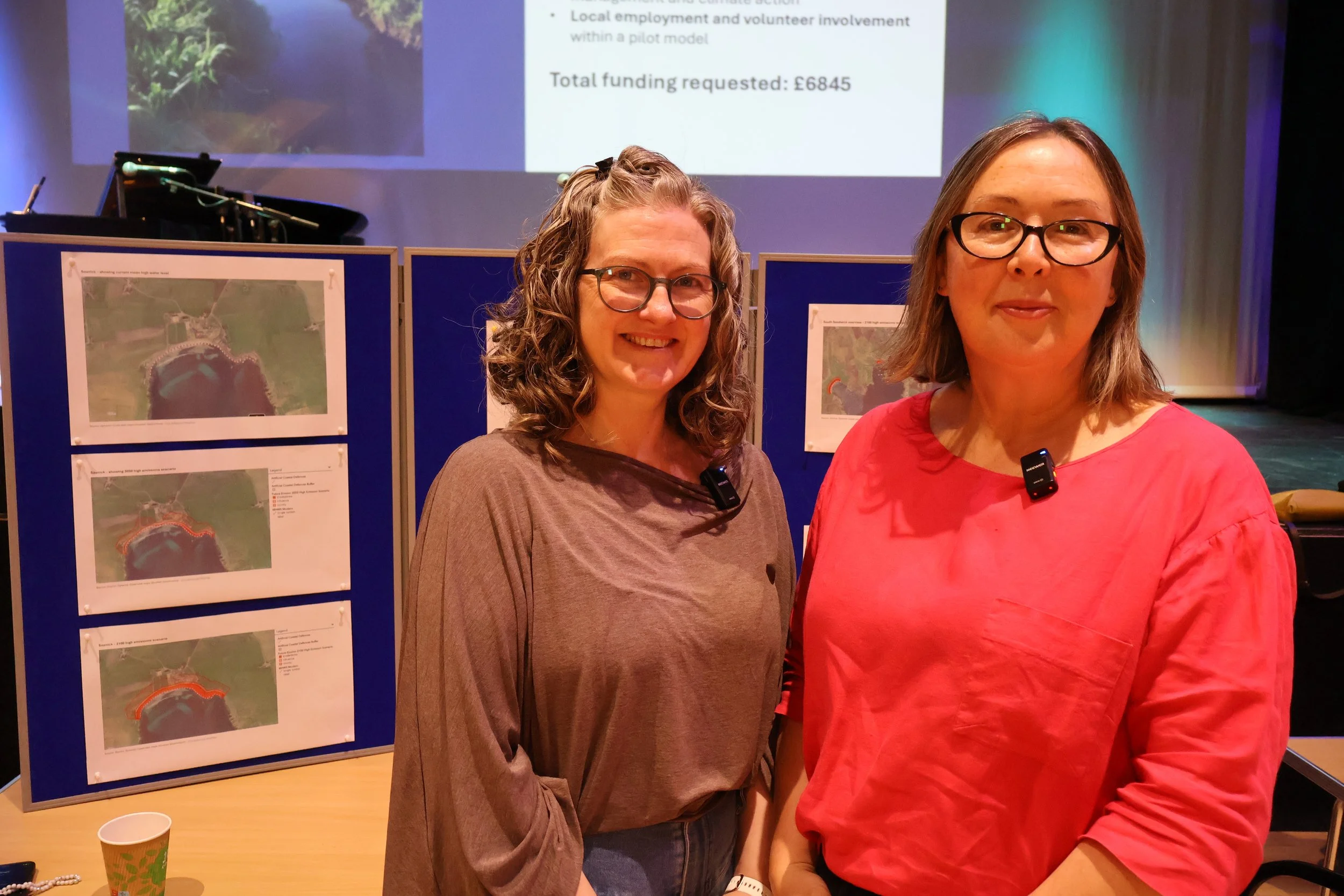
We then ran the workshop, “Shaping Sandwick’s Climate Future”. The workshop brought together community members to explore the key climate risks facing Sandwick and to identify priority actions for a community-led Climate Action Plan, which will be part of the Local Place Plans for Sandwick.
Participants (10 people) reviewed the 15 Climate Change Consequences for Scotland (by Adaptation Scotland) and collectively discussed how each one relates to local conditions. We then brainstormed actions to tackle those risks.
To better understand the risk of flooding we used the SEPA flood maps. For coastal erosion and sea level rise, we used the Dynamic Coastline advanced webmaps (links in resources).
What we learned
From this workshop, we learned that creating a space for discussion enables participants to build a clearer understanding of climate change, the specific risks facing their area, and the importance of collaboration and community capacity in responding to these challenges.
Through group discussions, the following risks were identified:
·Coastal erosion
·Flooding from heavy rainfall
·Energy supply vulnerability
·Food security concerns
We also learned that while Sandwick benefits from a strong base of engaged volunteers, there is a clear need for dedicated work. The presence of a community development worker was identified as a key enabler for sustaining long-term climate action and progressing with a community energy project.
For the wider Hub network, this initiative demonstrated the effectiveness of participatory workshops in moving people from awareness to action. By supporting participants to reflect on climate risks in their own community and immediately think of responses, we were able to create momentum for climate action.
Reflections
For the Hub, the workshop was very effective because it led to the formation of a local working group committed to taking forward the actions that we identified. From here, two project were born:
1. Coastal Erosion Project: A research and mapping project to assess coastal erosion risks in Sandwick and identify prevention and adaptation solutions for the community.
2. Sandwick Rewilding and meaningful opportunities: A coordinated rewilding programme creating tree planting, habitat restoration, and erosion mitigation projects while providing supported outdoor opportunities for local participants.
In March this year, H&I Climate Hub organised a Shetland Green Participatory Budgeting event, with a total funding pot of £60,000. Fourteen projects applied for funding, of which ten were successfully awarded support. These two projects were among the successful applicants, receiving £6,250 and £6,845 respectively.
This highlights the value of doing events not just for engagement, but for tangible actions and further support, specially financial support.
Next steps
The community of Sandwick are now through funding received focused on two climate adaptation and resilience projects.
Coastal Erosion project
Sandwick Rewilding and Meaningful Opportunities
The Highlands & Islands Climate Hub will continue to work with the community, monitoring the progress of the grants received and connecting them to further stakeholders to achieve their ambitions of a climate ready, resilient Sandwick community.
Resources/Further Information
Sandwick Community Council website: https://www.facebook.com/SandwickCC
SEPA flood maps. You can look at your area here: https://map.sepa.org.uk/floodmaps
Dynamic Coastlines https://www.dynamiccoast.com/webmaps
Shetland Green PB (Climate Action Ting) https://www.hiclimatehub.co.uk/shetland-particpatory-budgeting