Orkney Circular Economy Network Case Study
Summary
The Orkney Circular Economy Network was created out of a willingness to fill the gaps within Orkney’s circular economy. Facilitated by the Highlands and Islands Climate Hub, the Network meets monthly to discuss challenges, ambitions and learning opportunities. Key initiatives have included an online directory of circular economy services (hosted on the Climate Hub’s website), participation to a public “Climate Fair” event, and a workshop to identify local strengths and weaknesses. Peer-learning opportunities on circular economy in a rural island setting and solidifying trust across members will be key areas of focus for 2026.
Background
The Orkney Circular Economy Network was formed in June 2025 after the Orkney Community Planning Partnership identified the circular economy as an area with potential for collaboration that remained underexplored. The Network started with the Highlands and Islands Climate Hub, the Orkney Community Planning Partnership, Orkney Islands Council, Islands Centre for Net Zero, Greener Orkney and Orkney Zerowaste. The Highlands and Islands Climate Hub has undertaken the role of facilitator for the network, reflecting its interest in building connections between community groups and statutory organisations. The Network has grown and today includes a mix of community organisations, businesses, charities and social enterprises. There is an aspiration to involve more players such as businesses in the future. Its aim is to work collaboratively to address circular economy gaps in Orkney and maximise the use of resources and capacity. Ultimately, the Network’s goal is to see the circular economy embedded in all sectors in Orkney, growing resilience across Orcadian island communities. Currently, the Network counts twenty members and meets monthly to discuss issues and learn from each other.
What we did
Directory
We contacted organisations and businesses involved in circular economy activities opened to the public. These were compiled into a directory list available on the Highlands and Islands Climate Hub’s website. The aim of the directory is to ensure that the public has freely accessible information on how to repurpose, reuse, recycle and repair items.
Workshop
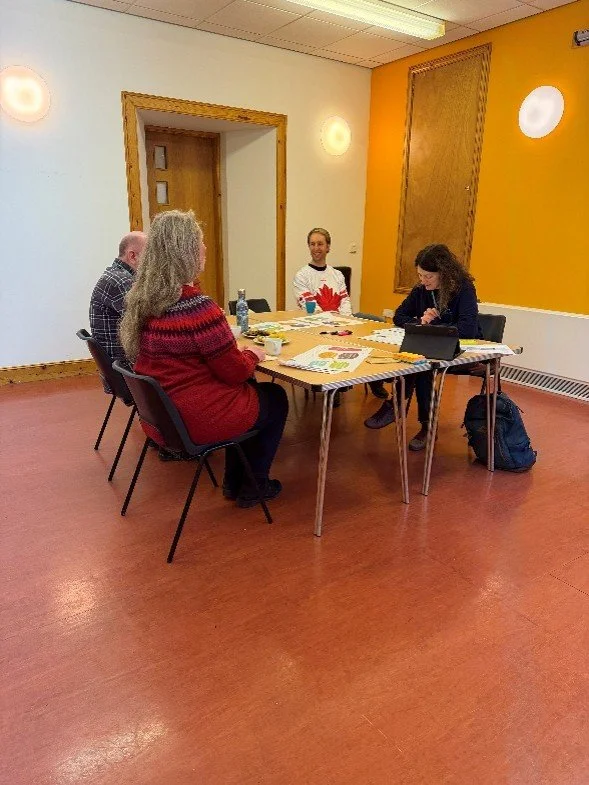
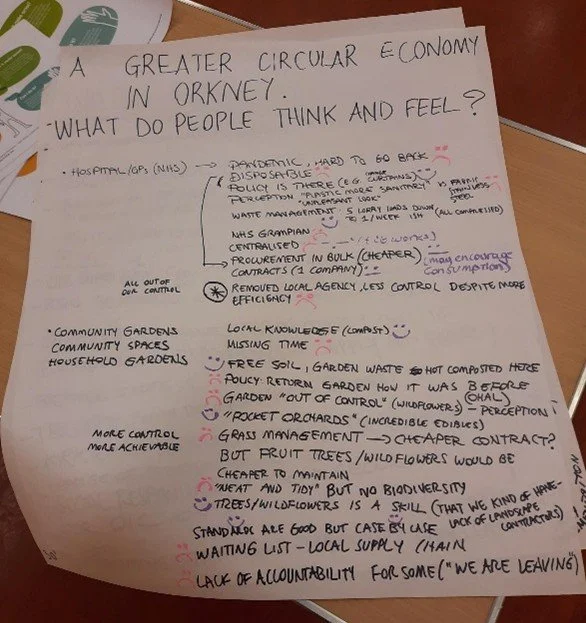
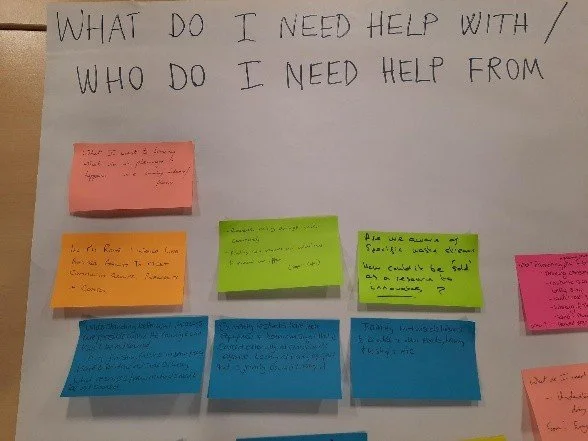
In December 2025 the Highlands and Islands Climate Hub facilitated the first workshop with Network members. The aim was to identify key strengths, weaknesses and specialties present within the Network and define ambitions and needs for the year 2026.
Monthly meetings
The Highlands and Islands Climate Hub facilitates online monthly meetings with members to discuss updates, activities, challenges and strategy. Our meeting is a space free of judgement where we think about how we can truly collaborate and fill capacity gaps.
Climate Fair
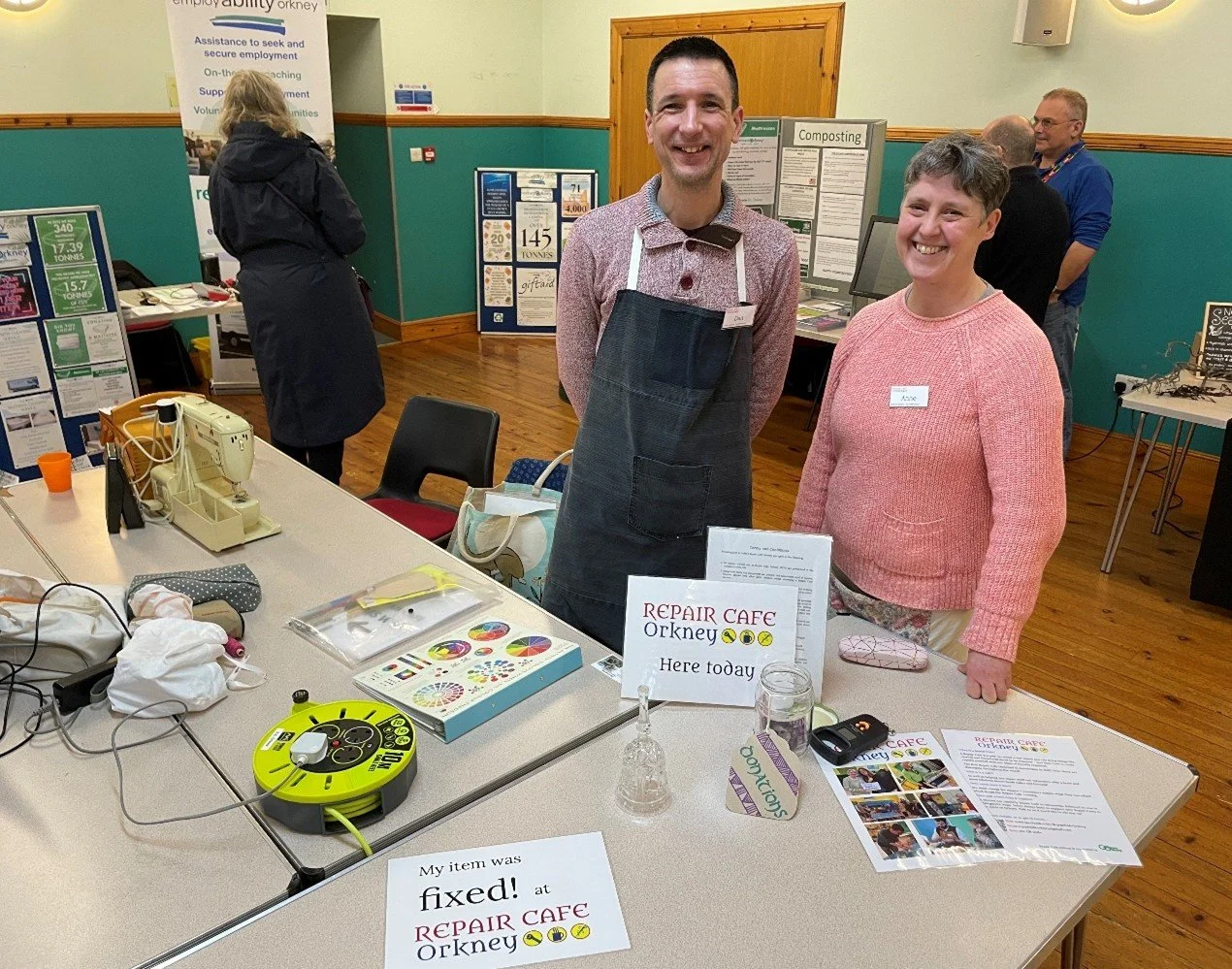
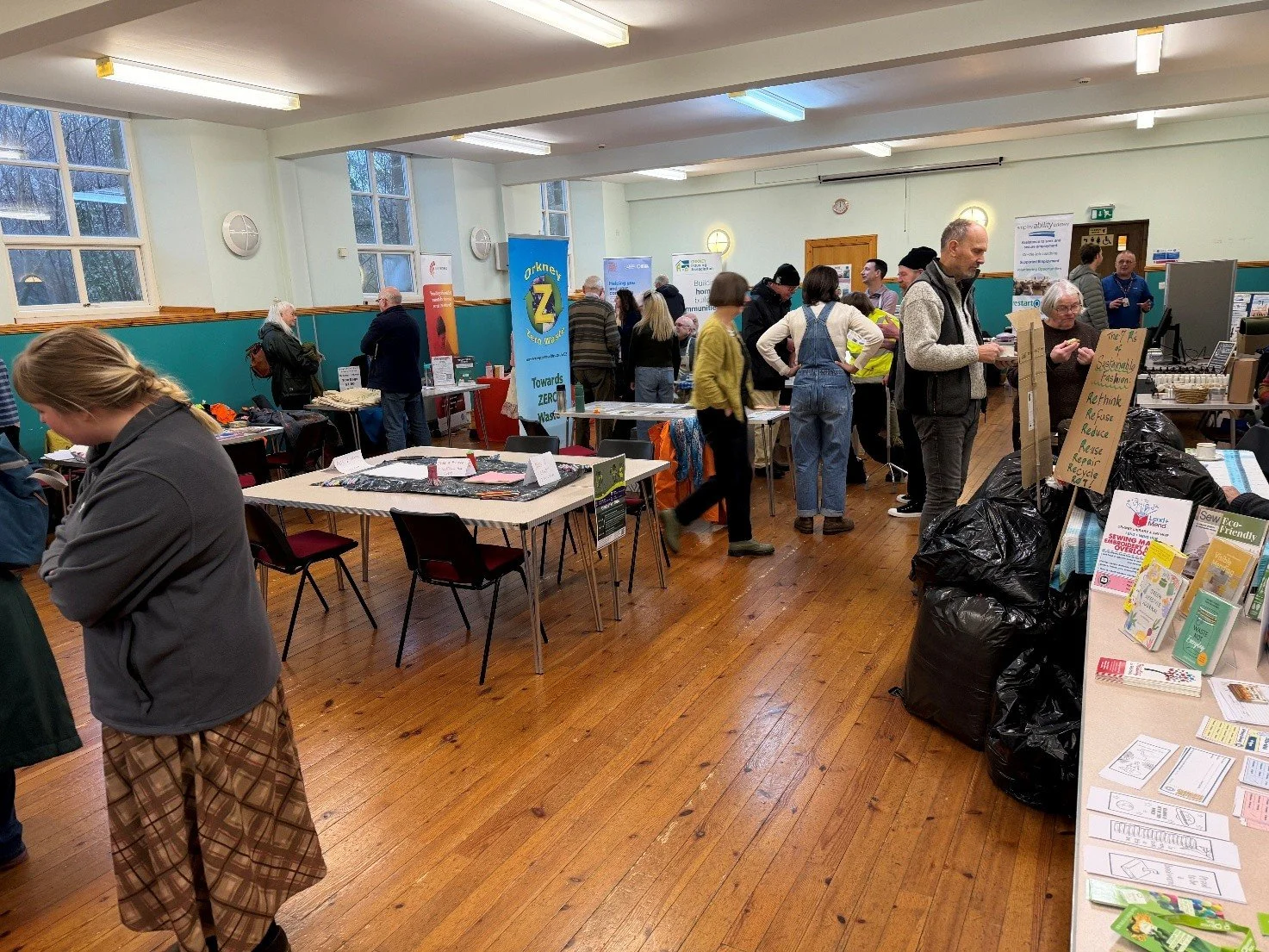
In February 2026 the Highlands and Islands Climate Hub held a public “Climate Fair” marketplace event with 15 stall holders involved in circular economy activities. A creative practitioner also engaged with children through theatre and crafts. In the afternoon, we had a small public workshop about how Orkney can do better at circular economy, which gave us an insight on how the public feels about circularity in Orkney.
What we learned
When starting a network, the initial phase of building trust between partners is crucial in developing solid relations. Whilst as a facilitator the Highlands and Islands Climate Hub has maintained good conversations and members interested, it has been challenging to gauge members’ capacity for network’s activities. This might derive from a relationship that needs to be more solidified, as building partnerships takes time and consistency. It is important to be realistic on expectations. It is fine to have big ambitions but start with small actions. Slowly ticking off small actions will build more trust in the network’s abilities (rather than disappointment with actions too big to pursue). Furthermore, clear internal communication is key, especially when allocating tasks. In this context, understanding members’ capacity is fundamental as it gives an overview of what is possible, members’ roles and thus expectations from each other. As mentioned, defining this has been the more challenging part for the Network, but we are taking small steps to define where people are comfortable working. As a starter, we have had conversations about members’ challenges with their own projects and tried to signpost collaborations to bridge gaps where possible. We have also identified our ambitions and data gaps during a workshop. We are currently procuring a small piece of work to gather the data that we need, which will partly inform our decision-making.
Reflections
Orkney has a plethora of circular economy initiatives already undergoing. This is the “island way of life”: availability of materials is limited in a rural island context; therefore, people do what they can to keep circulating materials.
The idea of collaborative work stems from a common understanding that there is no benefit in working in siloes and it is useful to combine efforts. As a consequence, this can help achieving bigger results. The Network will eventually need more buy-in from bigger players (e.g. the local authority, the NHS, businesses etc.) to truly work in partnership across sectors.
Regarding recycling, not everything can be recycled in an island context due to local infrastructure capacity and costs. In Orkney, this means that some items that would be considered “recyclable” in a city end up in the normal black rubbish bin, which is then shipped to Shetland to be burned in the local district heating system. The saying “One man’s trash is another man’s treasure” certainly applies to Shetland in this case, but members of the Orkney Circular Economy Network are keen to explore other ways in which our trash can become our treasure. Doing so would greatly improve local resilience.
Next steps
As mentioned, we have realised we are lacking data on Orkney’s current waste flows. The data from Orkney Islands Council lacks granularity, limiting the ability of partners to identify opportunities for reuse, sharing, and local value retention. The first step the Network is going to take, therefore, is to procure a small desk-based mapping exercise. By mapping materials, assets, and existing practices in greater detail, the exercise will provide a shared evidence base to inform decision-making. Whilst we gauge our capacity for future commitments, this year we will focus on developing peer-learning opportunities on circular economy in a rural island setting and solidifying trust across members.
Resources/Further Information
Directory and overview of the Network: https://hiclimatehub.co.uk/orkney-circular-economy-network
Orkney “Climate Fair”: